The Amazon Flex insurance policy can protect drivers during active deliveries, but it does not automatically replace personal auto insurance or cover every part of a delivery day. The safest approach is to map each driving period, confirm what Amazon provides in your state, and ask your insurer whether your personal policy accepts package delivery work.
This guide explains where Amazon Flex coverage may apply, where gaps can appear, and when a commercial policy or delivery endorsement may be worth considering.
Amazon Flex insurance policy: what coverage is included?
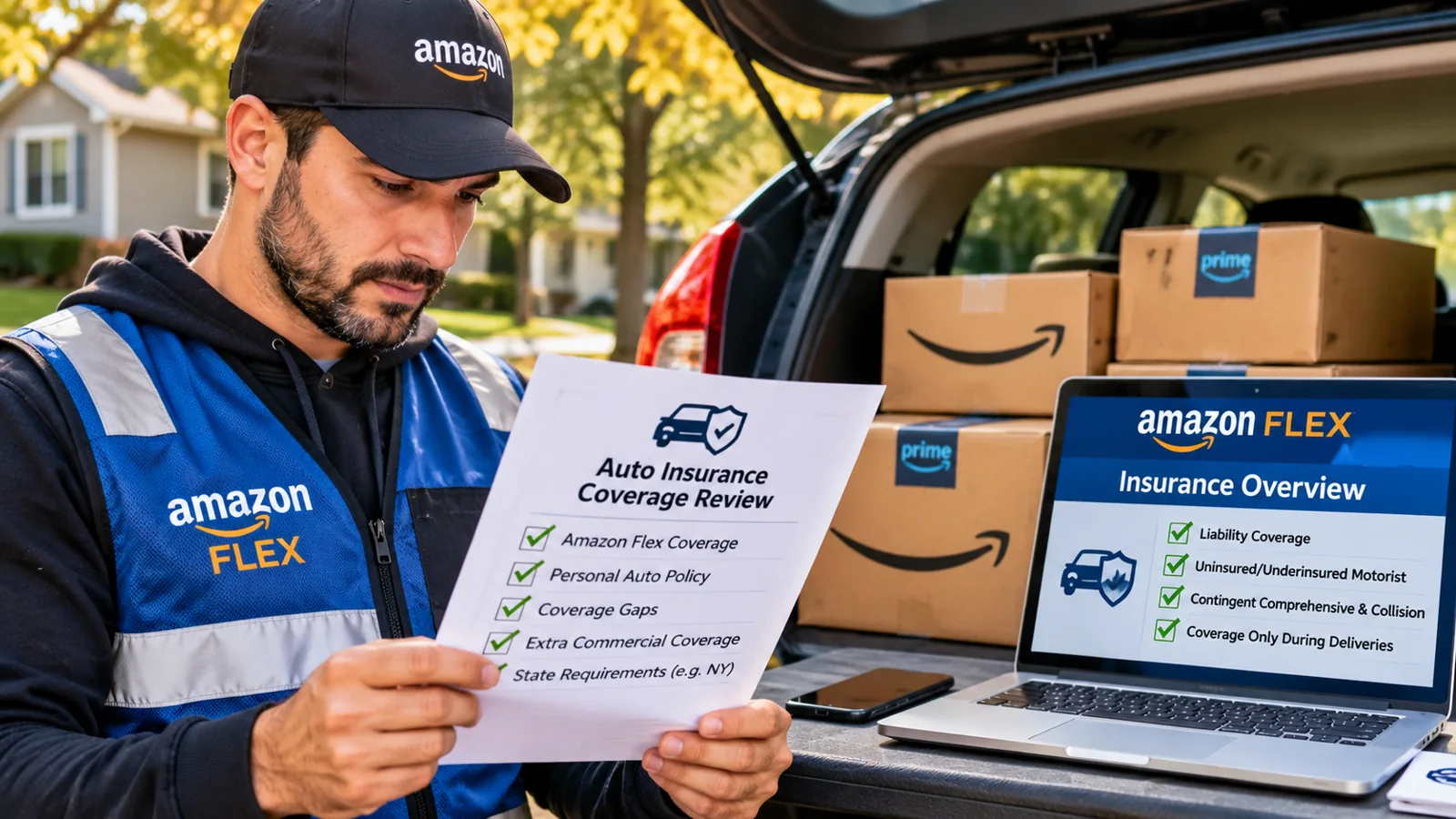
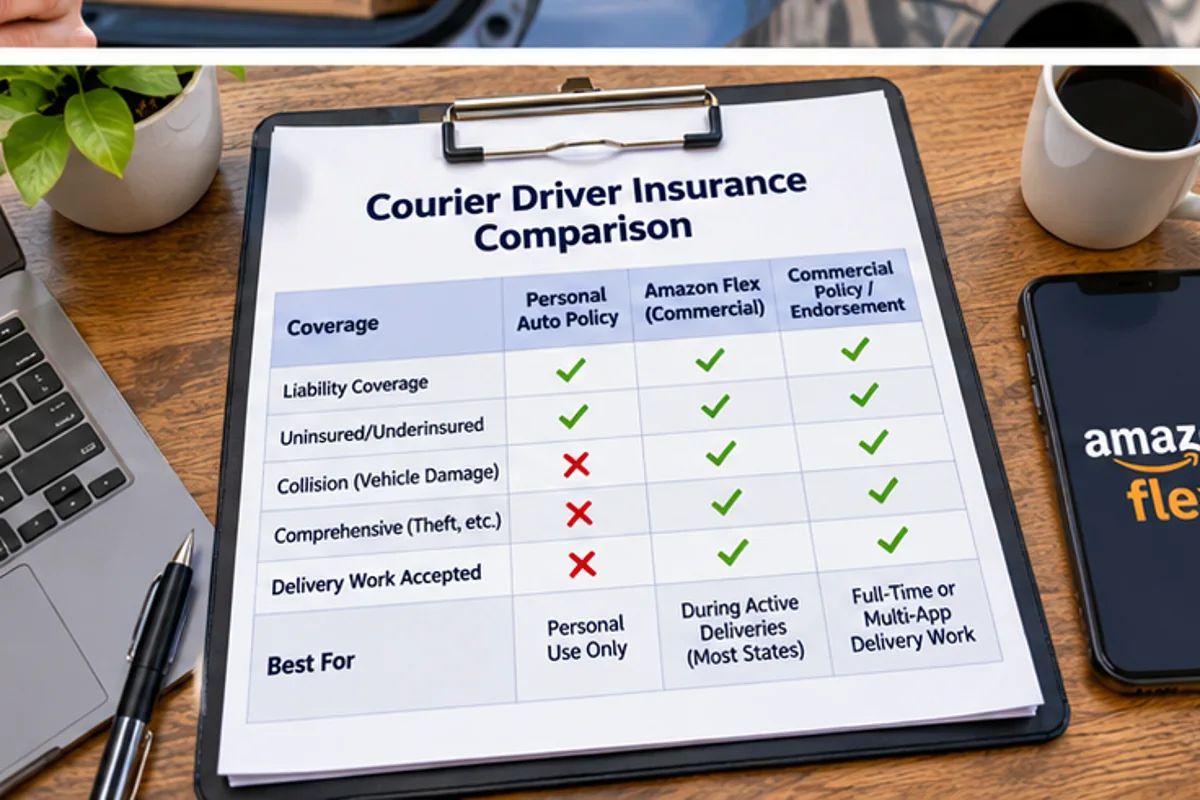
Amazon states that eligible Flex drivers in most states receive commercial auto coverage while actively delivering. The available protection can include automobile liability, uninsured or underinsured motorist coverage, and contingent comprehensive and collision coverage. Exact limits, deductibles, exclusions, and eligibility rules can vary by state and by the driver’s own policy.
“Contingent” matters. Damage protection for your own vehicle may depend on you carrying comprehensive and collision coverage on your personal policy. New York is also handled differently, so drivers there should review the current program terms carefully.
Why your own insurer needs to know
Many personal auto policies exclude or restrict coverage when a vehicle is used for delivery work. If your insurer has not approved package delivery, a claim could be delayed, limited, or denied. The issue is not only whether Amazon offers coverage; it is whether your own policy remains valid during the parts of the day Amazon does not cover.
Tell the insurer that you deliver packages for Amazon Flex and ask for a written answer. Do not describe the work only as “rideshare,” because transporting passengers and delivering goods can be classified differently.
Map the complete driving day
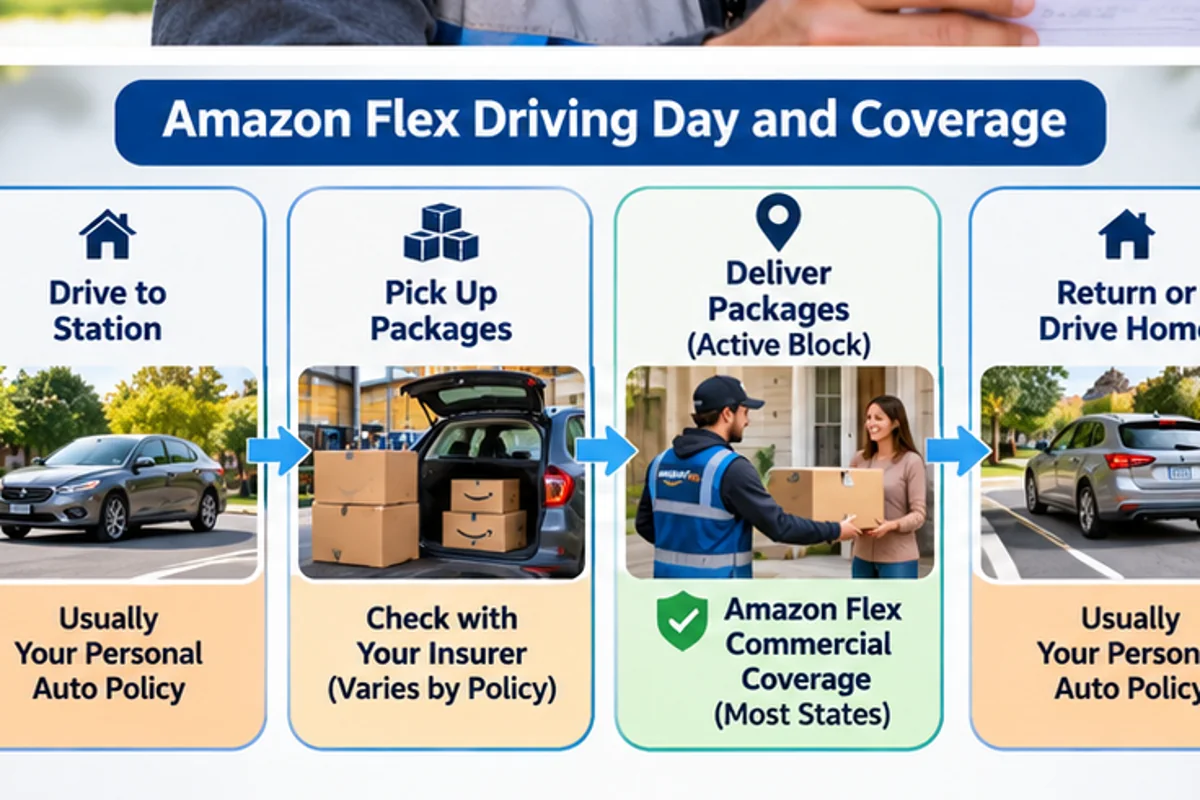
A delivery block includes more than the moment a package is in your hands. Coverage should be checked from the first trip to the station through the final drive home.
| Driving situation | Coverage question to resolve |
|---|---|
| Driving to pickup | Which policy accepts this business-related trip? |
| Waiting at the station | When does platform coverage begin under its terms? |
| Making deliveries | Which liability and vehicle-damage conditions apply? |
| Returning parcels | How is the return trip treated? |
| Driving home | Which personal or commercial policy applies? |
Review damage to your own car separately
Liability insurance pays for injury or property damage you cause to other people. It does not necessarily repair your own vehicle. For your car, review collision and comprehensive coverage, the deductible, and any conditions attached to Amazon’s contingent protection.
Ask whether theft, vandalism, weather damage, animal strikes, glass damage, and an at-fault crash are covered while you are working. Compare the deductible with the value of the vehicle and the cash you can comfortably pay after an accident.
New York drivers need a separate review
Amazon’s public information identifies New York as an exception to the standard coverage description. New York drivers should confirm the current state-specific requirements before accepting a block and should not assume that terms shown for another state apply to them.
Borrowed and rented vehicles need permission and coverage
If you use a car owned by a family member, the owner’s policy must allow the use and list you correctly as a driver. A rental agreement may prohibit delivery work even when an insurance policy appears to provide some protection. Check both the contract and the insurance before using a borrowed or rented vehicle.
Compare extra coverage by its actual terms
A delivery endorsement can sometimes be added to a personal policy. Other drivers may need a commercial auto policy. Compare when coverage begins, whether package delivery is specifically accepted, liability limits, vehicle-damage deductibles, roadside assistance, rental reimbursement, and how claims are coordinated with Amazon’s policy.
Questions to ask an insurance agent
- Does my current policy permit Amazon Flex package delivery?
- Am I covered while driving to the station and returning home?
- Is a delivery endorsement available, and what periods does it cover?
- What deductible applies to damage to my own vehicle?
- How would a claim be coordinated with Amazon’s commercial policy?
- Do I need higher liability limits or a commercial policy?
Include insurance in your delivery budget
Calculate delivery profit after fuel, maintenance, tires, depreciation, taxes, and insurance. A higher premium can still be worthwhile if it removes a serious coverage gap. Compare the annual added cost with the income you expect from Flex and the financial risk of an uncovered loss.
Keep the right information after an accident
Save screenshots of the active block, route, and delivery status. Record the time, location, other driver’s details, witness information, photos, and police report number. Notify the appropriate insurer promptly and follow both Amazon and insurer reporting instructions. Avoid guessing about fault or coverage at the scene.
Frequently asked questions
Does Amazon coverage replace my personal insurance?
No. You still need personal auto insurance that meets legal requirements, and your own insurer must accept how the vehicle is used. Amazon’s coverage applies only under its stated conditions and driving periods.
Is a rideshare endorsement enough for package delivery?
Not always. Some endorsements cover passenger rideshare but exclude food or package delivery. Ask for written confirmation that Amazon Flex delivery is covered.
Can another person drive during my block?
The registered Flex driver should follow Amazon’s participation rules, and any driver must be properly licensed and insured. Do not assume platform coverage transfers to another person.